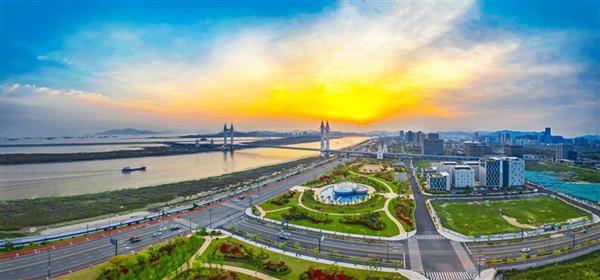
An aerial view of Zhoushan. [Photo/Tide News]
Zhoushan in East China's Zhejiang province has released its 2026 action plan for urban traffic congestion management, introducing a series of measures for infrastructure upgrades, public transport improvements, and smart traffic systems to enhance travel efficiency and residents' satisfaction.
The city aims to achieve satisfaction rates exceeding 90 percent for overall urban transport and public transit services. This year, Zhoushan will use big data and other technologies to address at least three congestion hotspots identified by residents, while also improving five frequently congested road sections such as Dongcheng Lu.
The city also plans to build and renovate more than 2 kilometers of urban roads, add 500 parking spaces, and upgrade 24 dead-end or bottleneck roads, with seven projects scheduled for completion within this year.
Public transport services will undergo further upgrades. The share of new-energy buses in the urban area is expected to reach 96 percent, with at least 10 new or optimized bus routes and two customized or themed routes added. The city will also work to improve bus punctuality and expand intelligent traffic signal controls.
Zhoushan will enhance its bicycle-sharing network, increasing service stations from 455 to 475 and the total number of shared bicycles to 5,000. Smart traffic management will also be strengthened, with traffic signals, electronic police systems, and video monitoring covering over 95 percent of major road intersections.
Additional measures include traffic optimization at five downtown intersections, a demand-responsive bus pilot in Zhujiajian Island, and customized school bus services to ease congestion around schools.










 浙公网安备33010502011796号