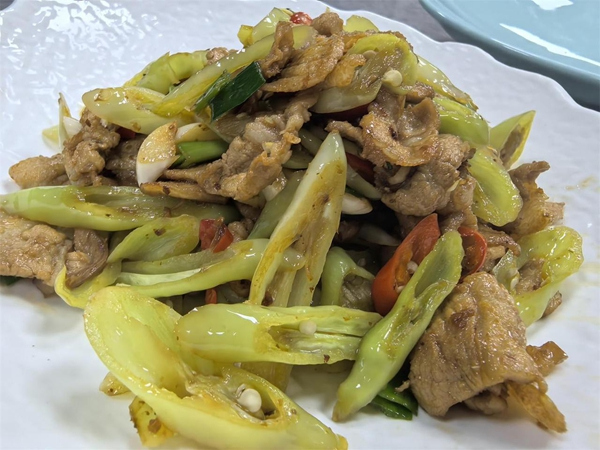
A plate of spicy stir-fried pork, cooked by an intelligent cooking robot, is ready to be served in the kitchen of Oriental Hotel in Quzhou. [Photo/Tide News]
At noon on Nov 2, the pickup area of Oriental Hotel in downtown Quzhou was bustling with delivery riders. In the kitchen, two intelligent cooking robots handled the cooking automatically, from adding ingredients and controlling temperatures to stir-frying and plating, reducing the need for chefs to operate woks manually. The robots simulate 360-degree manual tossing, producing dishes with bright colors and rich aromas.
Since the robots were put into use on Sep 18, dishes have been consistent in taste, order efficiency has improved markedly, and repurchase rates have continued to rise. Robot cooking represents more than an equipment upgrade — it is a systematic improvement of the entire catering chain, ensuring consistent output while adapting to growing demand for food delivery and passing cost savings on to consumers.
The robots are equipped with an industrial-grade visual recognition system that identifies ingredient maturity in real time, with temperature control accuracy of ±1 C. Supported by centralized procurement, central kitchen processing, and an online sales platform, ingredient specifications are fully standardized.
The group has also established a digital dish R&D center, where four veteran chefs have broken down cooking techniques into parameters fed into the system, refining over 40 standardized dishes from more than 100 local recipes. The system is creating a "light Chinese meal" category — more cost-effective than traditional dining and higher in quality than ordinary fast food — which is expected to become a new driver of growth for Quzhou's catering sector.










 浙公网安备33010502011796号