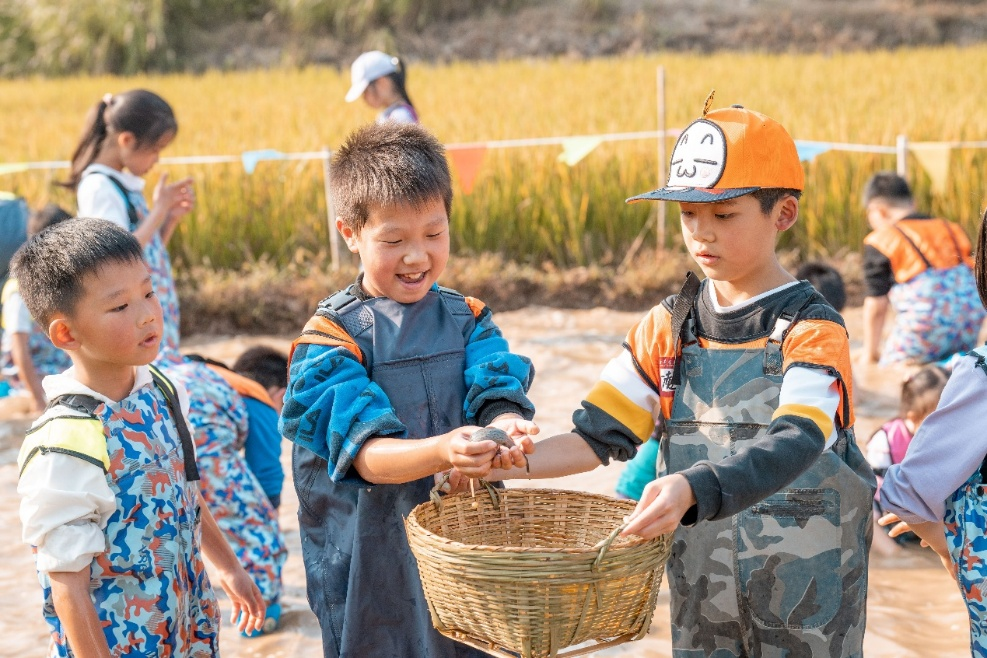
As early October approaches, golden rice paddies sway in the breeze at Xiazhu Lake Fantasy Valley in Deqing, Huzhou, Zhejiang province.
"This is the season for cotton picking, digging sweet potatoes and catching fish in rice paddies — all part of our hands-on learning programs," said Zhang Xulan, deputy director of the park's study tour camp.
With autumn break overlapping the National Day holiday, 32 groups have already booked the programs. Now she is gearing up for this busy period.
Study tours have become a popular choice for many Chinese families. The market's prosperity index stands at 126.9, a relatively high level, according to a 2026 survey report on China's study tour market released by China Association of Travel Services.
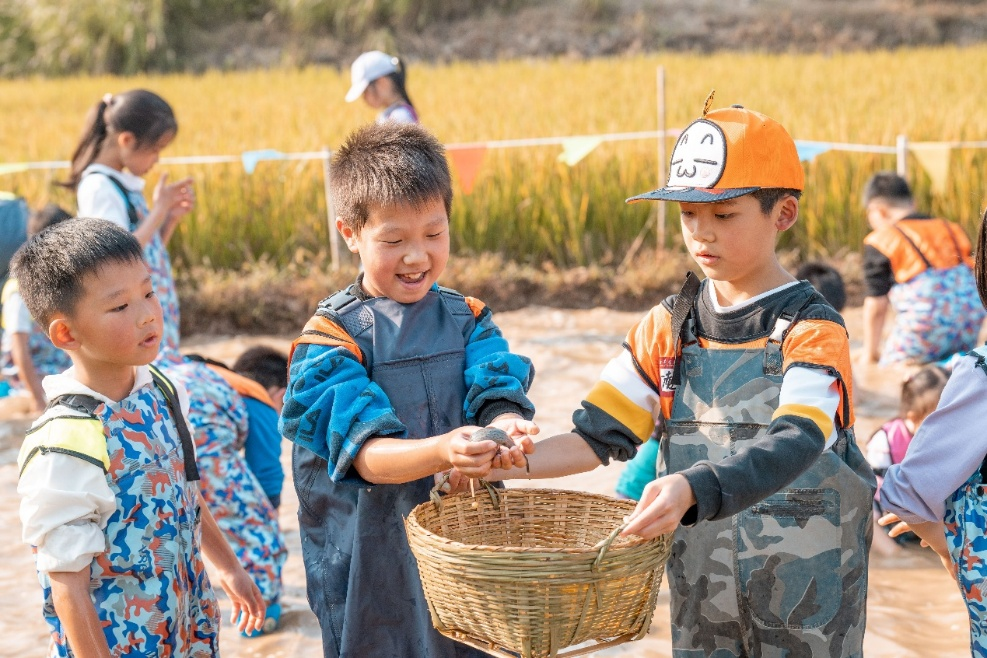
Children smiled after catching fishes during a rice paddies study tour at Xiazhu Lake Fantasy Valley.
Local resources enrich study tours
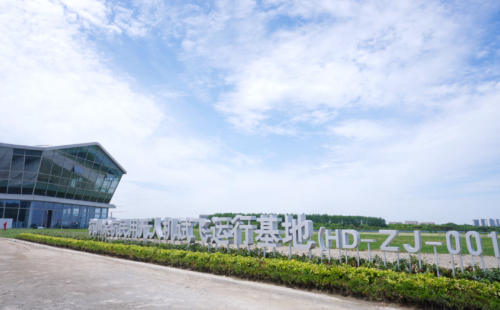
At Deqing Moganshan Airport, children on study tours put on pilot uniforms and climb into a flight simulator to experience "flying a plane."
The airport has received more than 10,000 study tour visits this year, with the farthest group coming from Nagqu in the Xizang autonomous region.
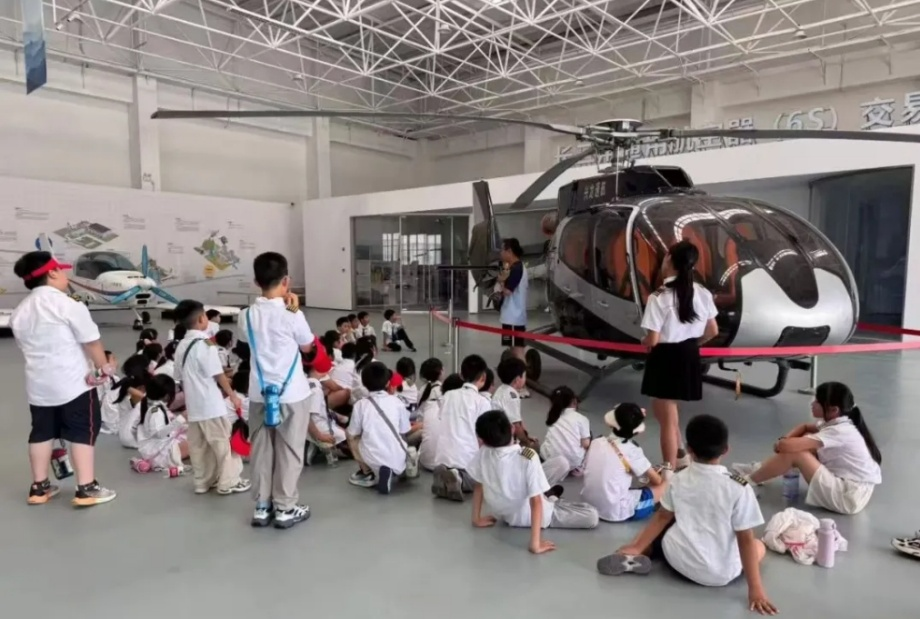
Children visited an aircraft hangar and learned core components including the fuselage and wings at Deqing Moganshan Airport.
At Deqing Youth Academy of Geospatial Information Sciences, children fly drones and interact with robotic dogs to learn about artificial intelligence.
The president Wan Yehua said that local geospatial information companies provide support for study tours, turning their expertise into a "living textbook".
Geographic Information Technology Museum, where the academy is located, was again recognized as a national base for popularizing geoinformation science this year.
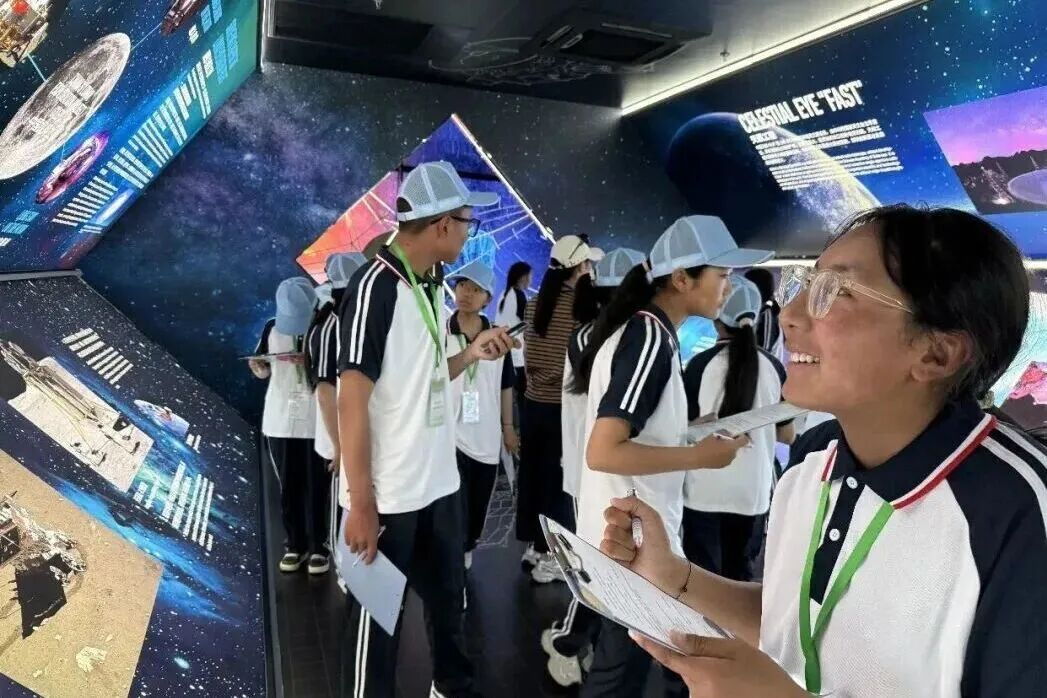
Teenagers from Nagqu in the Xizang autonomous region visited Geographic Information Technology Museum.
Opening mussels to harvest pearls is a popular activity at OSM Pearl Museum, giving visitors a hands-on introduction to Deqing's pearl farming system.
A delegation of 50 faculty members and students from 20 countries at Spain's IE University visited the museum this summer. The professor of history Karen Nershi praised Deqing for balancing modernization with the preservation of local traditions.
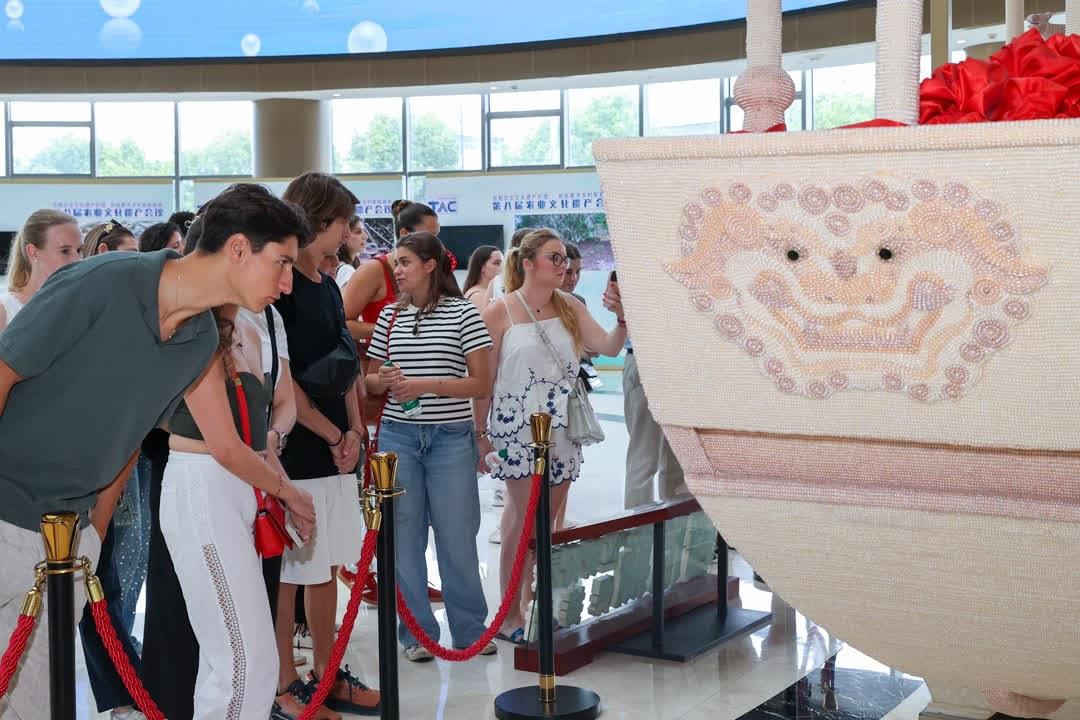
Faculty members and students from Spain's IE University visited Deqing.
As night falls over Moganshan's forests, children explore grasslands and stream banks with expert guides, learning about bioluminescence and insect courtship signals.
A Shanghai student identified a previously unrecorded geometrid moth species in Moganshan, with the findings published in an international journal, said Ni Minjing, director of Shanghai Science and Technology Museum. The example illustrates how ecological resources can support study tours.
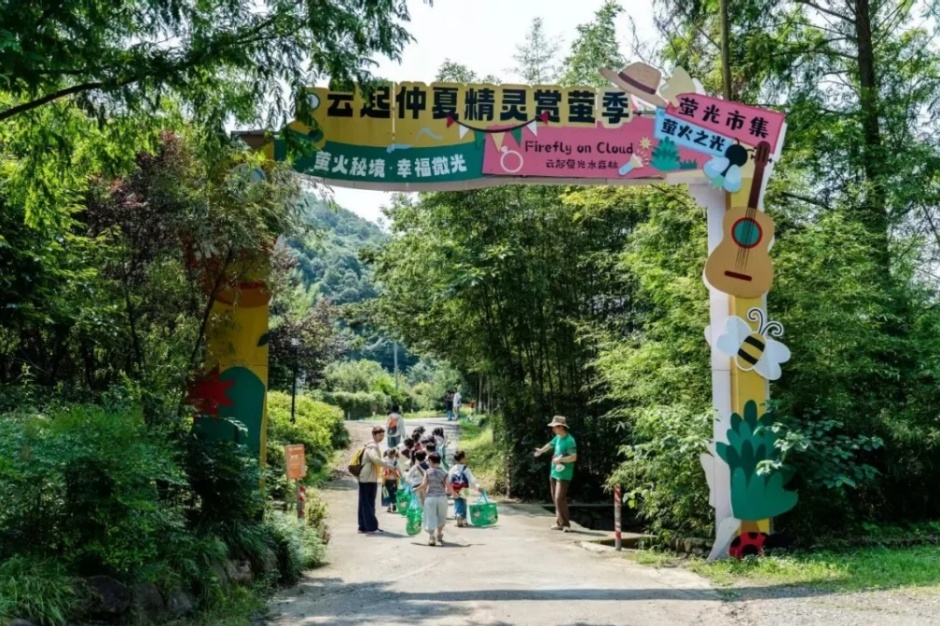
Children explored local forests under the guidance of teachers.
Building a study tour brand
As the study tour market expands, competition is intensifying.
For Deqing, the challenge is to turn the current public enthusiasm into sustained growth by building a study tour brand and gaining a lasting reputation.
Deqing will develop study tours in ecology, history and culture, intangible cultural heritage, technological innovation, outdoor adventure and homestays, said Xu Huan, a local culture and tourism official.
Xu added that Deqing plans to offer programs throughout the year and attract 400,000 study tour visitors this year.
Additionally, a dedicated fund is planned to support renovations at study tour sites, classroom standardization, and safety upgrades. An instructor training system is being developed, and preparations are underway to establish a county study tour association.









 浙公网安备33010502011796号