Shengsi, an outlying archipelago in the East China Sea about two hours from Shanghai, is home to China's largest thick-shelled mussel farming base. The county produces 260,000 tons of mussels annually, accounting for about 70 percent of the country's total output.
In the first half of this year, Shengsi exported 4,197 tons of mussels worth more than $8.2 million, both record highs for the same period. From 2022 to 2025, annual export value exceeded 100 million yuan ($14.88 million) for four consecutive years. Today, Shengsi mussels are sold in more than 30 countries and regions, including Thailand, Russia and Chile.
From a remote island in the East China Sea to dining tables around the world, this humble shellfish has become a global export. It is also doing something unexpected: helping reduce carbon emissions.
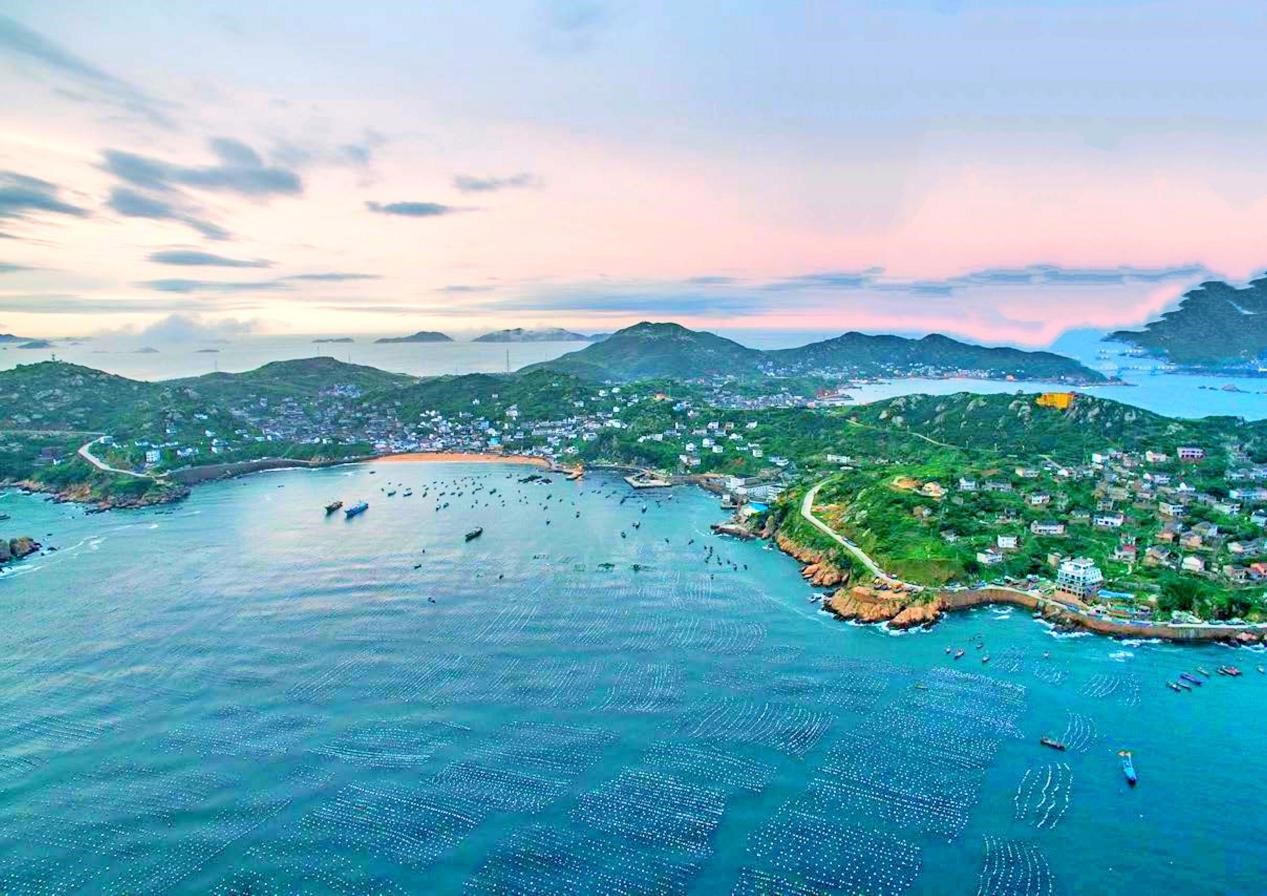
A mussel farm in Shengsi County
A Mussel That Won Global Recognition
In January, Shengsi's live mussels received the prestigious 3-Star Award from the International Taste Institute, the highest distinction often referred to as the "Oscars of the food industry". In May, they became the first shellfish product in China to obtain antibiotic-free certification.
Food safety and sustainable sourcing are among the top concerns for consumers worldwide, and Shengsi mussels now meet both expectations.
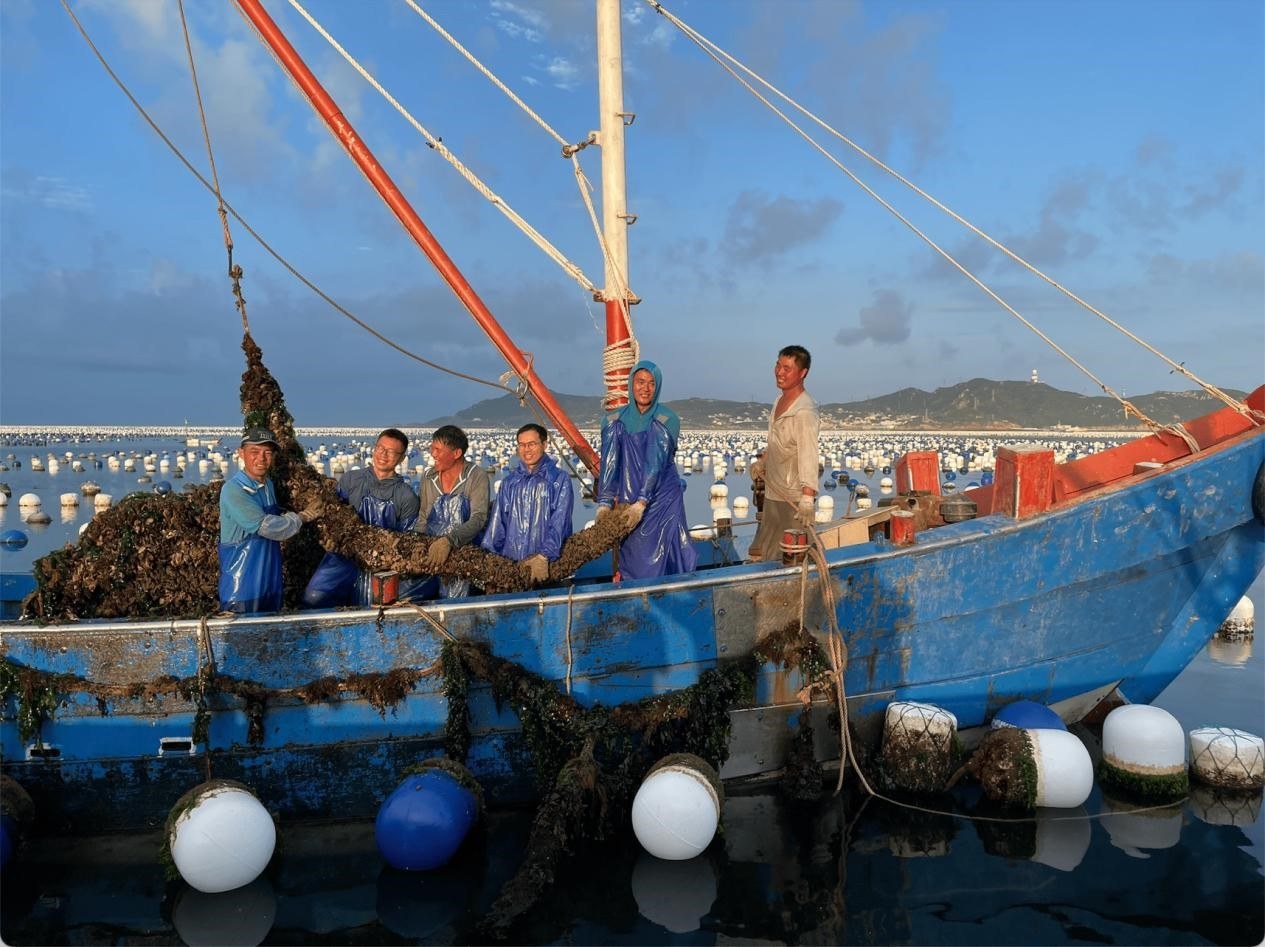
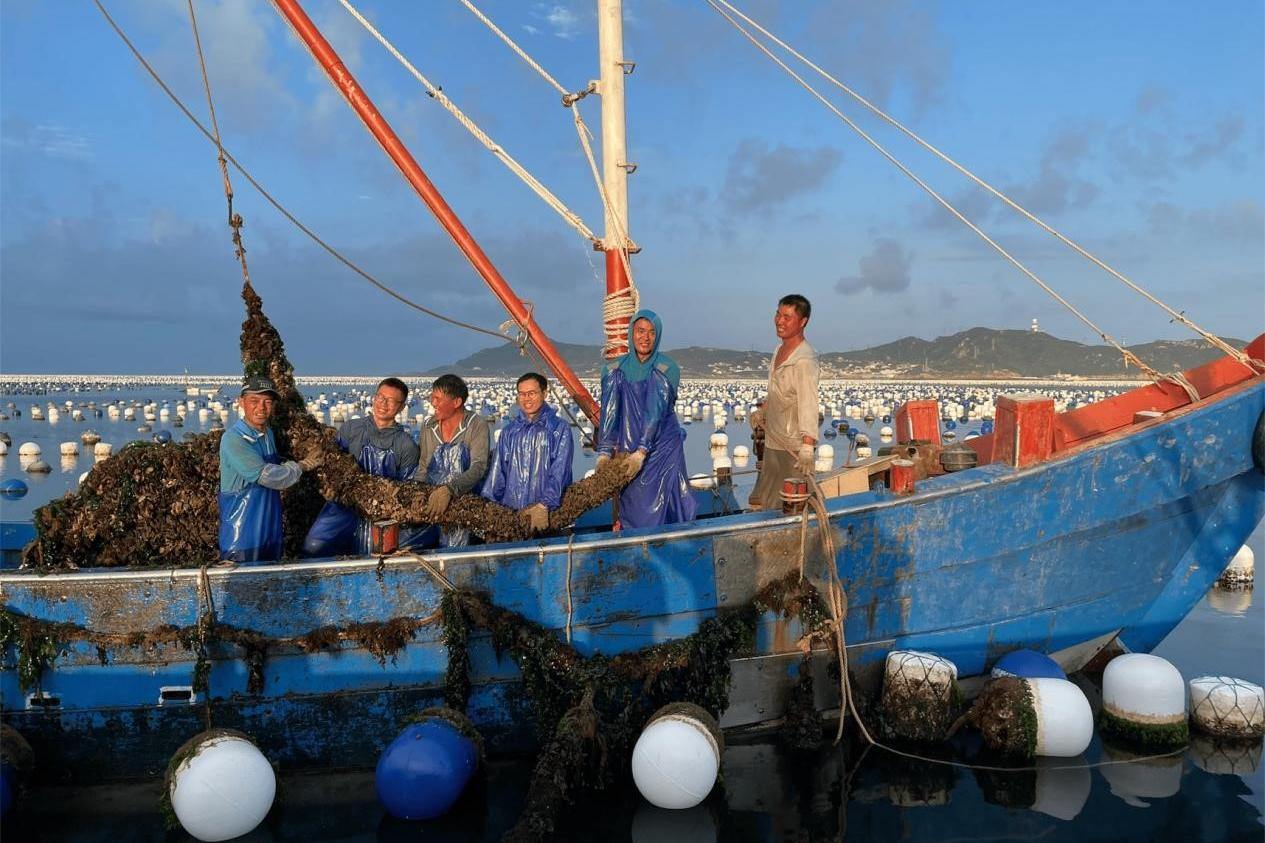
Farmers tend mussels in Shengsi County.
The secret to their quality is simple: time.
While industrial aquaculture often prioritizes speed, Shengsi mussels spend three full years growing in deep-sea waters before harvest. The extended growing period allows richer flavor to develop and gives the meat its firm, springy texture. In 2025, Shengsi mussels were even served at a Chinese state banquet.
"Our mussel products have obtained multiple international certifications, and export orders have already been booked through the second half of this year," said Yu Xiangming, head of Huali Aquatic Products, a company based on Gouqi Island. Its products are now exported to more than 20 countries and regions, and this year the company entered the Chilean market.
"The biggest challenge used to be convincing overseas buyers of our product quality," Yu recalled. "Now that we have internationally recognized certifications, negotiations have become much easier."
From Asia to South America
Shengsi's global footprint continues to expand. From Southeast Asia to South America, and from Europe to the Middle East, the "Black Pearl of the East China Sea" is reaching more markets than ever before.
Russia has become its fastest-growing export market. In the first half of this year, exports to Russia reached about 1,005 tons, worth approximately $2.65 million, up 83.98 percent and 74.64 percent year-on-year, respectively. In the first quarter alone, export volume surged 106.97 percent while export value rose 95.36 percent. According to Shengsi Customs, 70 percent of local export-oriented mussel producers have now obtained registration recommendations for the Russian market.
Breaking into Russia was far from easy. The country has strict import requirements for aquatic products, and approval often takes months or longer. Local customs authorities provided tailored guidance to help companies meet Russian standards and gradually gain market access.
To further expand overseas markets, local companies have actively participated in major international trade fairs, including the Shanghai International Fisheries Expo and the China Fisheries & Seafood Expo. The local government has also introduced supportive policies and financial incentives to encourage businesses to explore global markets.
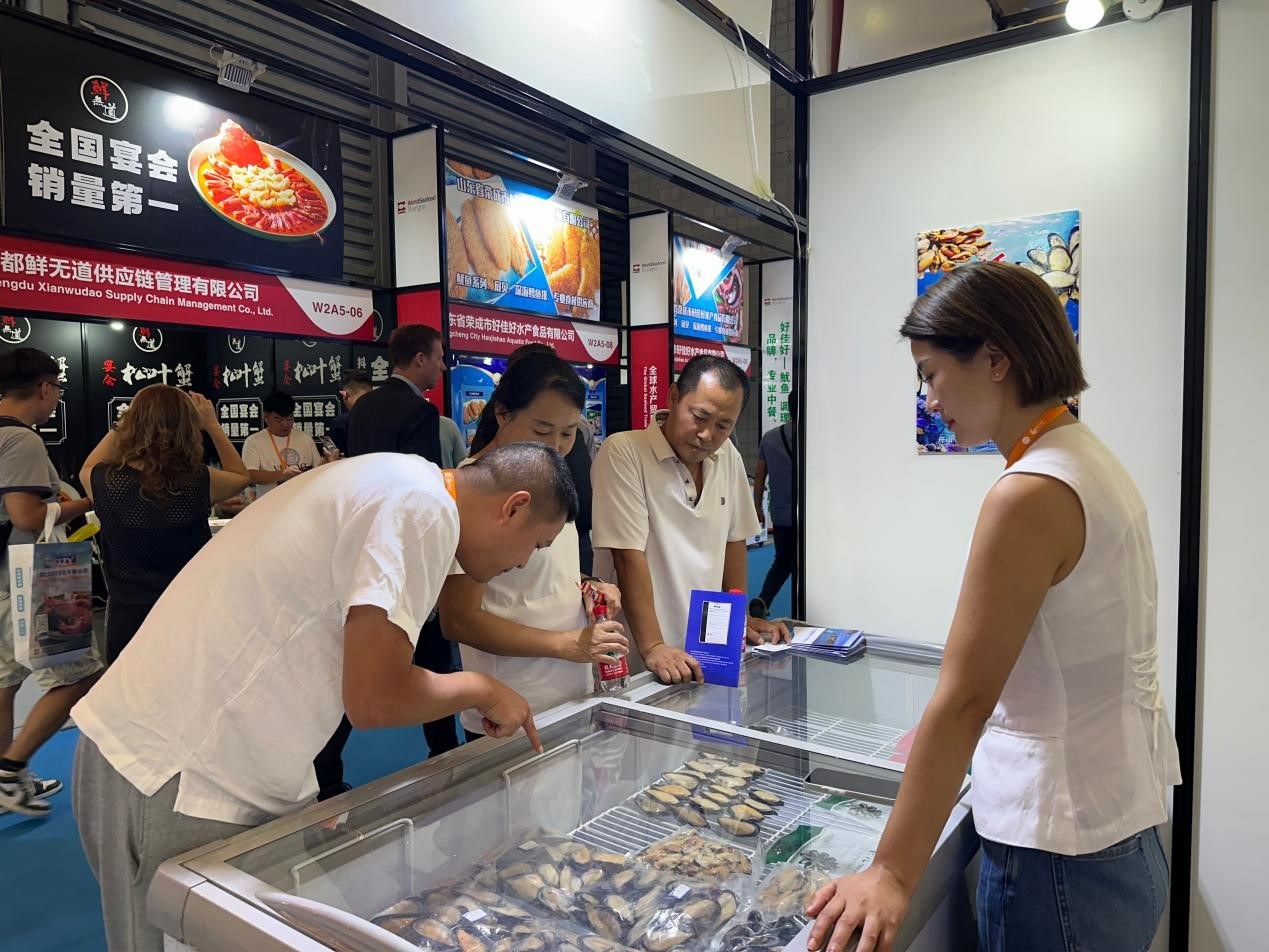
Shengsi mussels at Shanghai International Fisheries Expo
When Mussels Become Carbon Assets
If quality and market access are Shengsi mussels' competitive strengths, blue carbon may be their most distinctive advantage.
Blue carbon refers to carbon captured and stored by marine ecosystems. For years, whether shellfish should be included in blue carbon accounting remained a subject of international academic debate.
A research team from Zhejiang Ocean University developed a "mussel-algae-microbe" carbon sequestration model using isotope tracing, field observations and laboratory simulations. Their research confirmed that mussel farming promotes the accumulation of recalcitrant organic carbon in marine sediments. This form of carbon remains stable for long periods without returning to the atmosphere, effectively achieving long-term carbon sequestration.
Data show that Shengsi mussel farming generates more than 1,900 tonnes of recalcitrant organic carbon each year. In 2025, Gouqi Township established China's first blue carbon measurement benchmark site for mussel aquaculture, making shellfish blue carbon measurable, reportable and tradable.
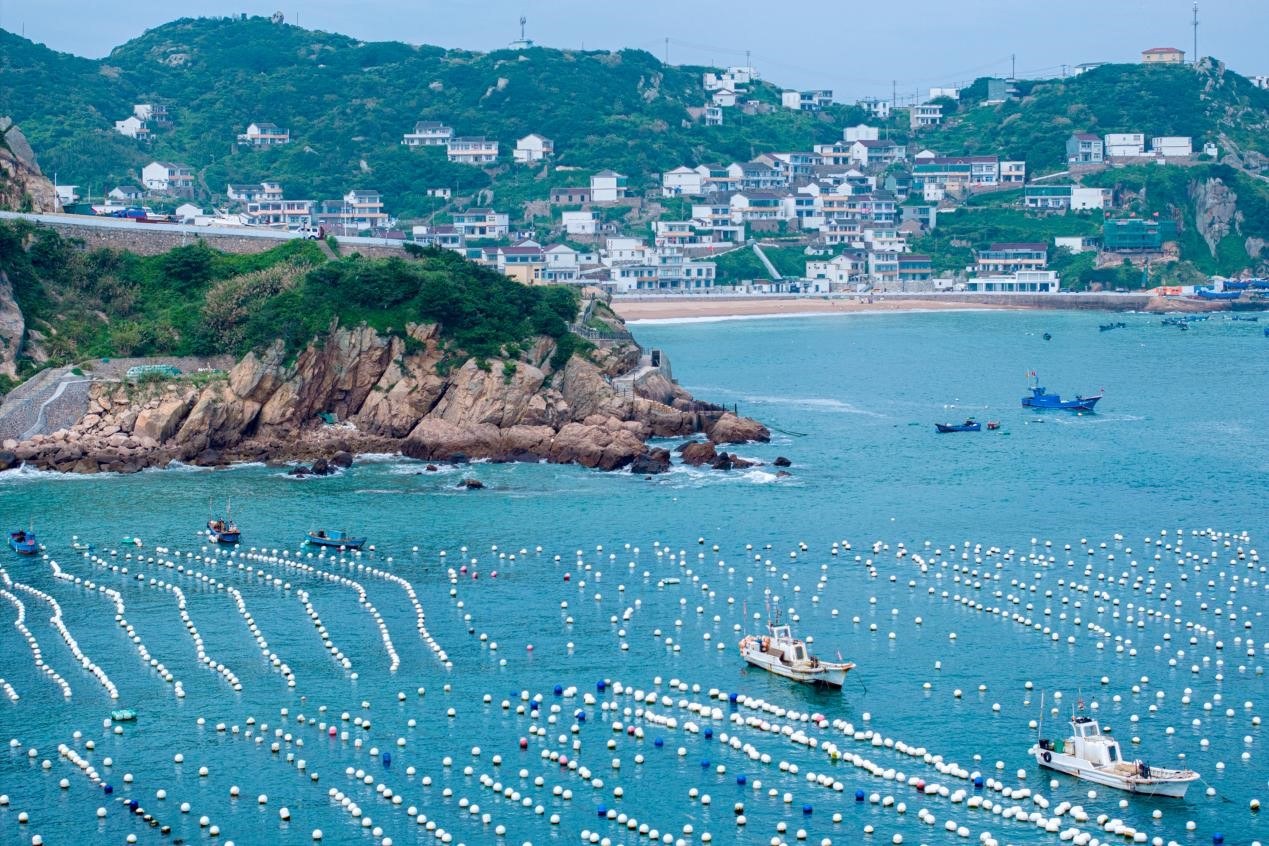
A mussel farm in Shengsi County
In June that year, the Shengsi County People's Procuratorate purchased 500 tons of blue carbon credits for 50,000 yuan as ecological compensation, completing Zhoushan's first "marine public interest litigation + mussel blue carbon" transaction.
Last year, a total of 1,979 tons of blue carbon credits were converted into economic value, generating nearly 200,000 yuan.
In July this year, Zhejiang released the province's first guideline on carbon sink pledge financing for shellfish aquaculture. Soon afterward, Shengsi Rural Commercial Bank issued Zhejiang's first marine carbon sink loan of 2 million yuan to support mussel seedling purchases and equipment upgrades.
"We used to earn money only by selling mussels," one local farmer said. "Now even the carbon they capture has value."
From selling seafood to trading carbon, Shengsi's mussel industry is demonstrating how marine resources can support both economic growth and climate action.
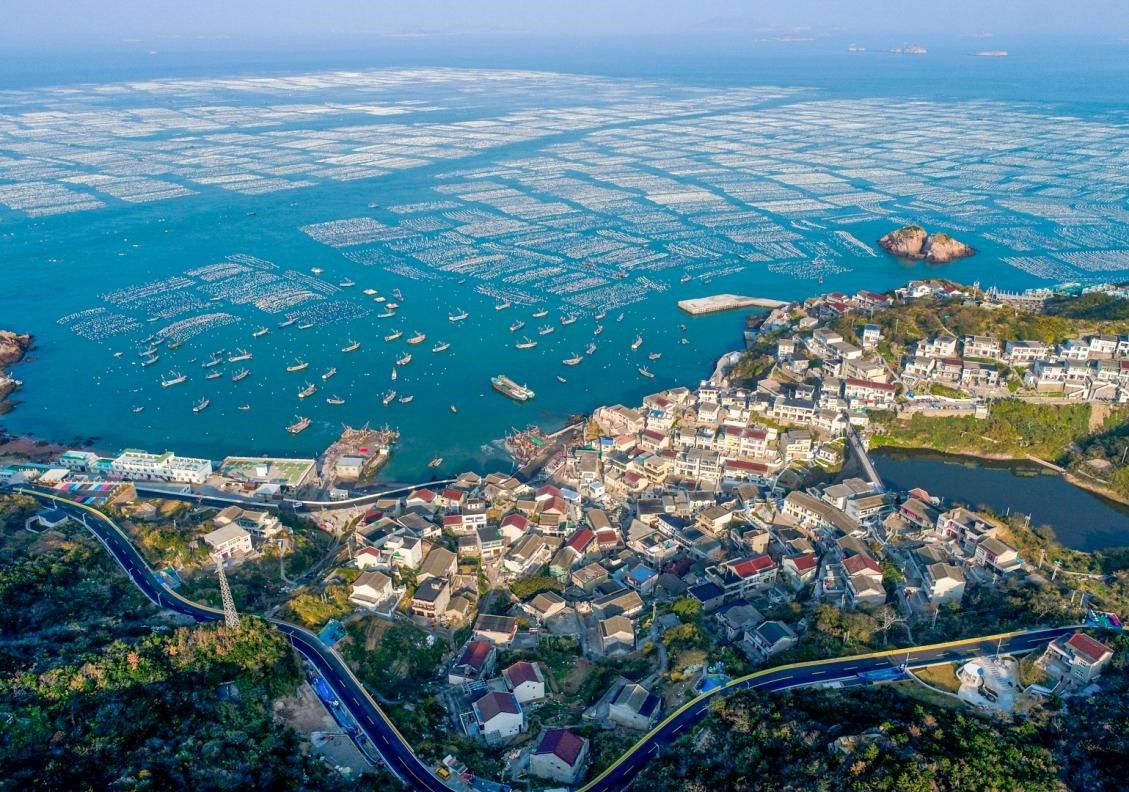
A mussel farm in Shengsi County
The story of Shengsi mussels reflects how a remote island community has found its place in global markets, while showing how a traditional industry can create new value through green innovation.
From a remote island to dining tables in more than 30 countries, and from selling seafood to generating value from carbon sequestration, Shengsi's mussel industry is exploring new possibilities at the intersection of aquaculture, global trade and the blue economy.
Reporter: He Yini
Editor: Zhong Xinyi









 浙公网安备33010502011796号