In Jiaxing, Zhejiang province, robots are learning everyday skills such as folding clothes, organizing items and handling objects in a simulated home environment at the Institute of Flexible Electronics Technology of THU Zhejiang.
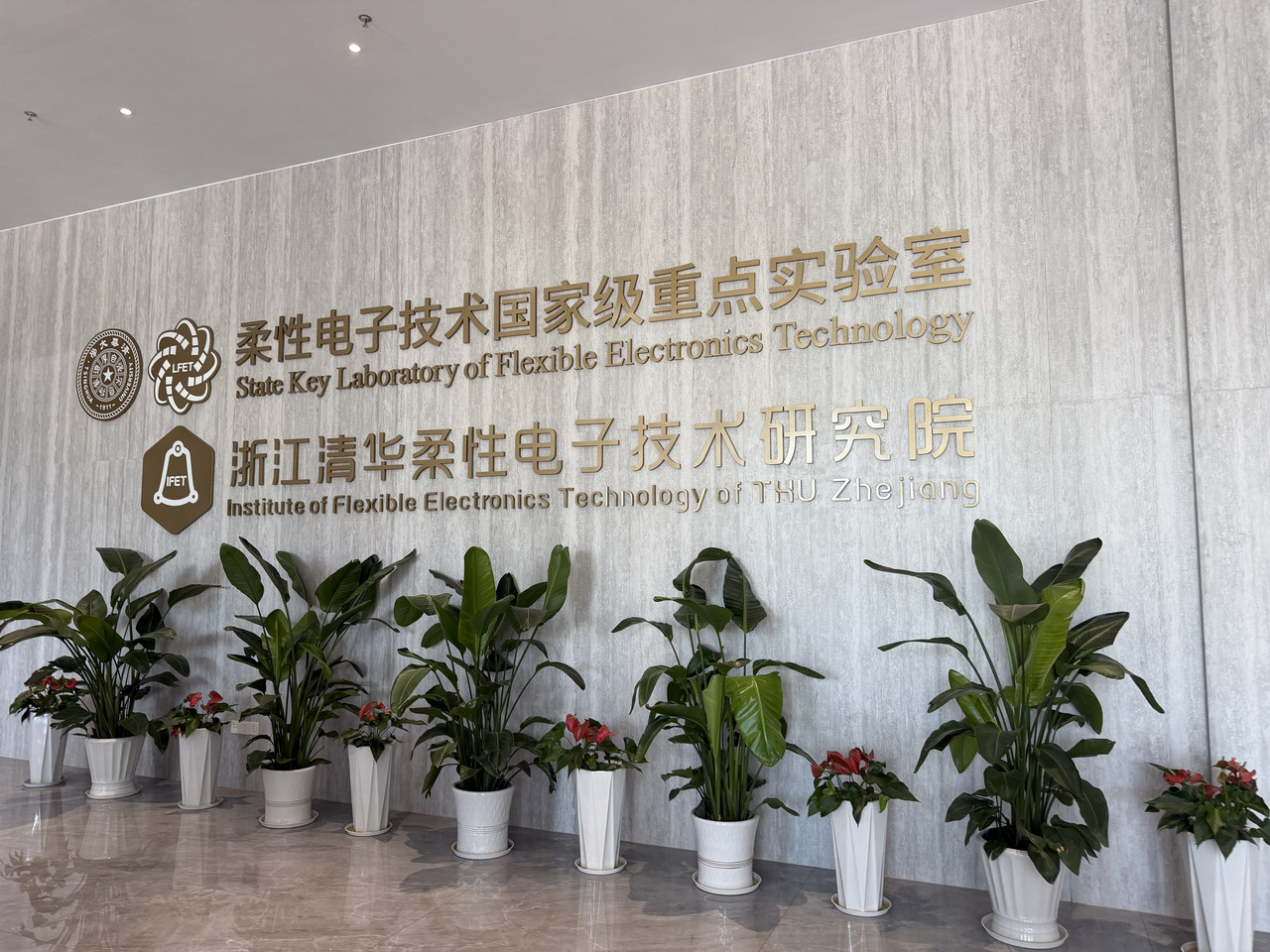
Behind these seemingly simple tasks is a complex process of training, data collection and fine-tuning. By combining flexible electronics technologies with embodied AI, researchers are exploring how robots can better perceive and interact with the real world.
Giving robots a sense of touch
For embodied AI robots, movement is only the beginning. To perform tasks in real-world environments, robots also need the ability to sense changes through physical interaction.
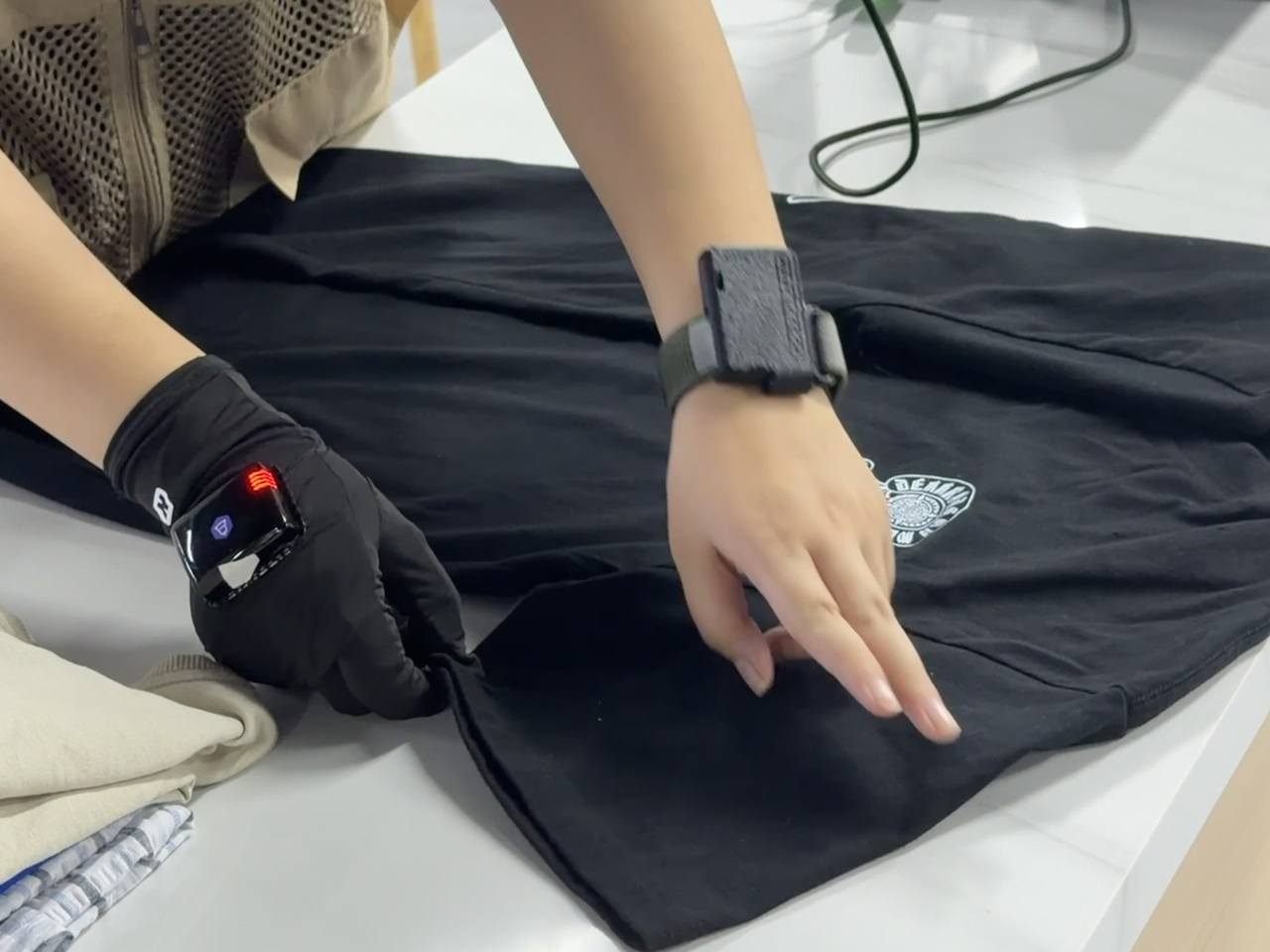
The institute has developed flexible tactile sensing devices that function like “electronic skin”. Based on flexible electronic integration technologies, these devices can attach to curved surfaces such as robotic fingers and arms, allowing robots to sense information including pressure, temperature and texture.
Xu Ting, an associate researcher at the institute, noted that the collected sensory information helps robots adjust their operations in different situations from handling delicate objects to applying stronger force when needed.
Beyond developing sensing technologies, the institute has also built a platform for large-scale robot training and data collection.
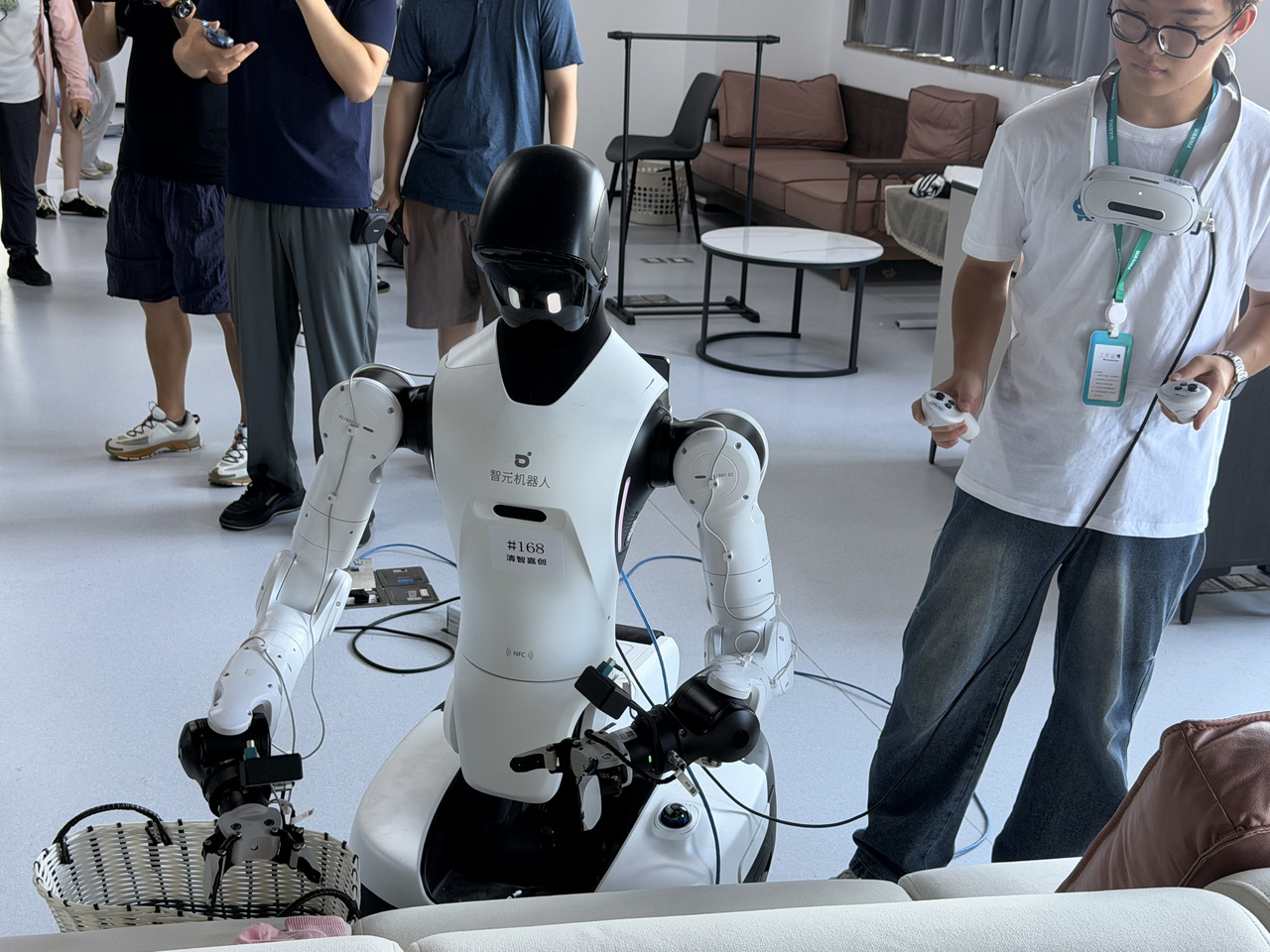
The multi-modal sensing and embodied intelligence data collection training facility has deployed 240 humanoid robots and assembled a team of more than 300 data collection specialists.
The People Behind Robot Training
Behind robots learning new skills is a group of young people known as data collection specialists.
At the institute’s embodied AI training facility, they work alongside robots in simulated environments. Wearing VR headsets and using robotic grippers, they demonstrate tasks and collect data that helps robots learn and improve.
The work may appear simple, repeating specific movements and providing demonstrations, but it requires careful control and consistency, as human actions need to be translated into data that robots can understand.
According to Chen Yihao, an associate researcher at Tsinghua University, the development of embodied AI and expanding robot applications are driving increasing demand for data collection specialists. The institute also cooperates with universities outside Jiaxing to provide internship opportunities and help students enter the emerging field.
Building Data for Smarter Robots
To support robot training and algorithm development, the institute has built a multi-modal sensing and embodied intelligence data collection training facility.
The facility has deployed 240 humanoid robots and established a professional data collection team of more than 300 people. Through multi-scenario, multi-task and multi-modal data collection, it covers applications including precision assembly, flexible operations and human-robot collaboration.
So far, the facility has completed more than 12,000 hours of real robot data collection, providing support for embodied AI algorithm iteration and model training.
About the Institute of Flexible Electronics Technology of THU Zhejiang:
Established in 2017 by the Zhejiang Provincial Government and Tsinghua University, the Institute of Flexible Electronics Technology of THU Zhejiang is a new research institution focusing on flexible electronic devices and smart terminals. The institute has developed an innovation model integrating concept verification, pilot-scale development and commercialization, aiming to connect scientific research with industrial applications.









 浙公网安备33010502011796号