At the Hangzhou Institute of Optics and Fine Mechanics (SIOM-H) in Fuyang district, Hangzhou, a number of optical technologies are finding their way from research platforms into real-world applications.
During a recent visit to SIOM-H, ZICC reporter saw optical components and research achievements developed through the institute’s innovation ecosystem, including ultra-wide bandgap semiconductor gallium oxide materials, multi-functional doppler LiDAR and cold atomic clocks.
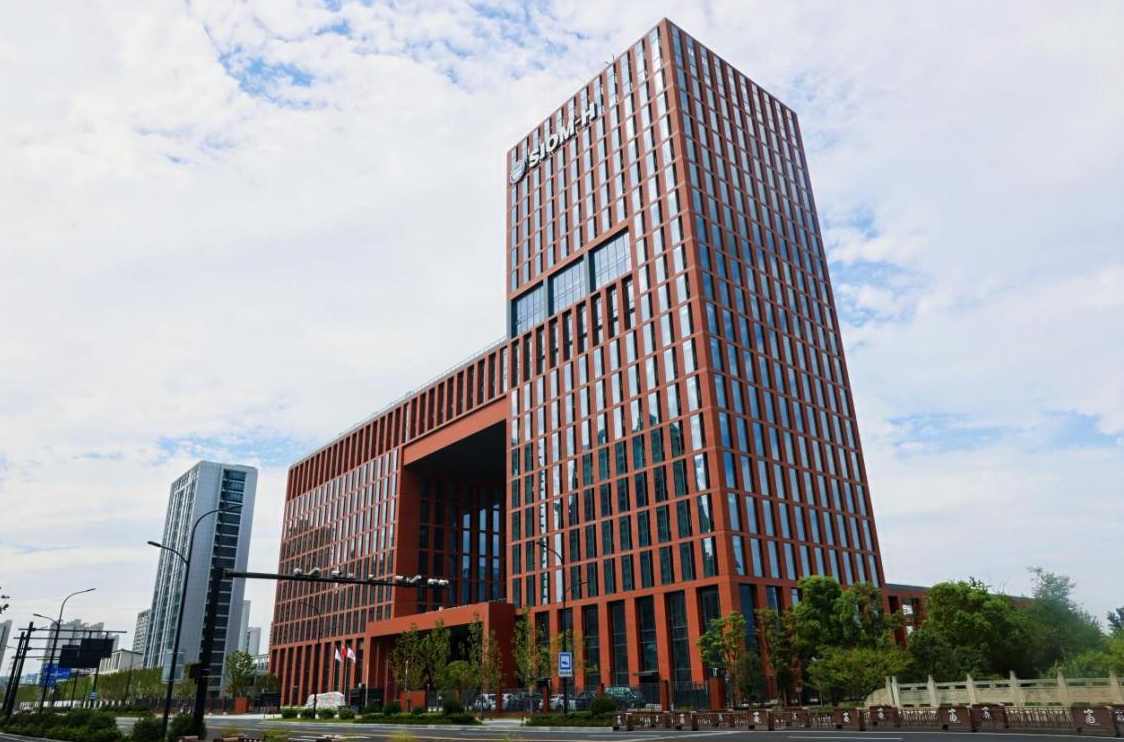
Hangzhou Institute of Optics and Fine Mechanics
Founded in 2019, SIOM-H is a new-type R&D institution jointly established by the Shanghai Institute of Optics and Fine Mechanics, Chinese Academy of Sciences, and the Fuyang district government of Hangzhou.
Focusing on hard technologies in optoelectronic new materials, SIOM-H aims to become “the incubator that understands scientist entrepreneurship best”.
To support scientists in transforming research achievements into products, SIOM-H has developed an incubation model known as “selection, cultivation and grafting”.
Through an integrated approach combining investment, incubation and cultivation, SIOM-H provides long-term support to help scientific achievements move from laboratories toward industrial applications. “We position ourselves as entrepreneurial partners for scientists,” said Qi Hongji, director of SIOM-H.
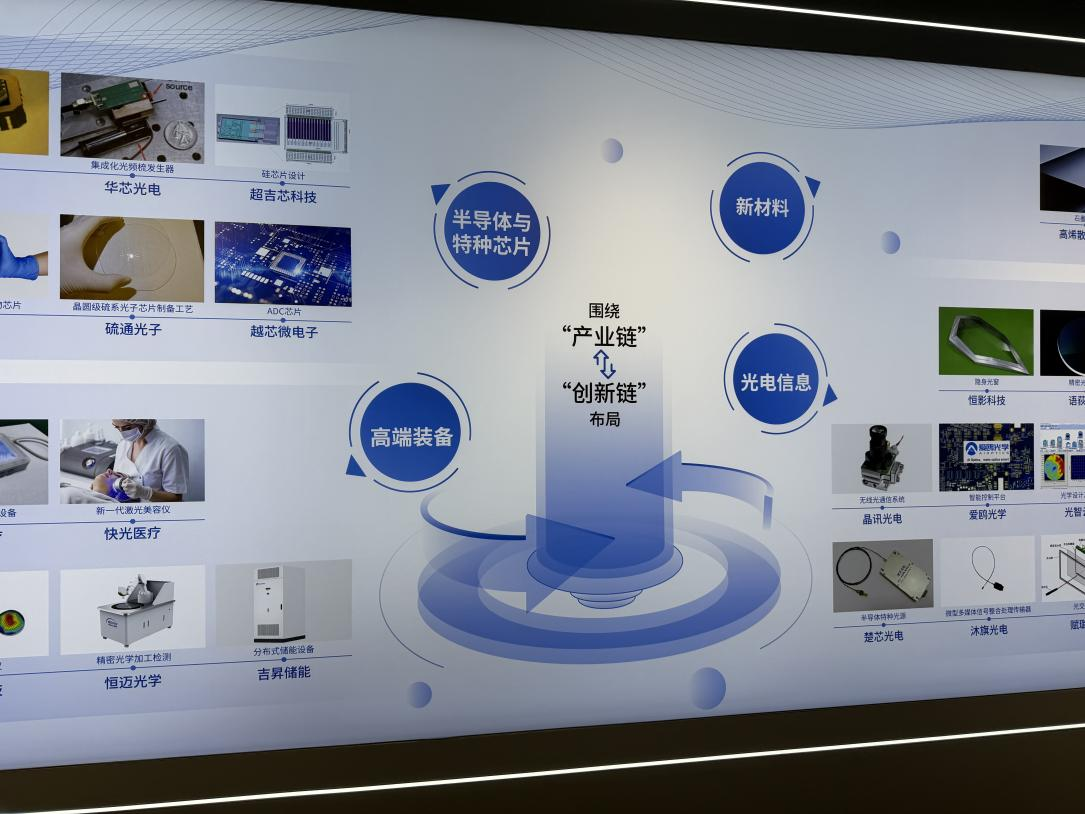
SIOM-H’s industrial and innovation ecosystem
According to Qi, many technology companies have strong scientific capabilities but may lack experience in commercialization and business development. SIOM-H provides support beyond funding and facilities, including talent introduction, resource connections, technology support, market exploration and assistance in building business strategies.
So far, SIOM-H has incubated more than 70 companies, gathered over 40 national-level leading scientific talent teams, attracted more than 5 billion yuan in social capital, and supported incubated companies with a combined valuation exceeding 50 billion yuan.
For example, Fujia Gallium has achieved progress in gallium oxide crystal growth and successfully produced 12-inch gallium oxide single crystals, a key material for fourth-generation semiconductor technologies.
According to Qi, the breakthrough made Fujia Gallium the only team in the world to master this technology and attracted cooperation interest from international industry players. The company was later recognized as one of Hangzhou’s “quasi-unicorn” enterprises in 2026.
Fujia Gallium has also built a high-quality gallium oxide substrate production line, further promoting the application of gallium oxide materials in the semiconductor field.
For SIOM-H, transforming scientific achievements into industrial value requires more than technological breakthroughs. It requires connections between scientists, entrepreneurs, investors and industries.











 浙公网安备33010502011796号