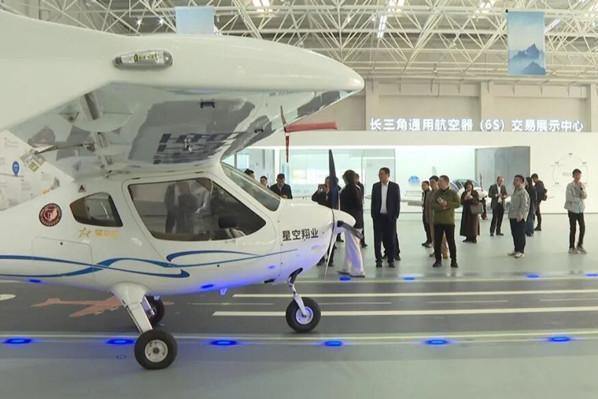
Huzhou in Zhejiang province has launched a strategic plan to boost its low-altitude economy, aiming to become a hub for low-altitude aircraft and key component manufacturing, advanced technology research, and specialized low-altitude applications.
Located in the heart of the Yangtze River Delta region, Huzhou boasts a solid foundation in smart equipment, new materials, and new energy sectors. The city hosts two A1-class general airports: Anji Tianzihu and Deqing Moganshan, providing strong support for the low-altitude economy's development.
The plan focuses on six areas: industrial development, technological innovation, infrastructure, flight safety, real-world applications, and regional collaboration, with 20 major tasks outlined.
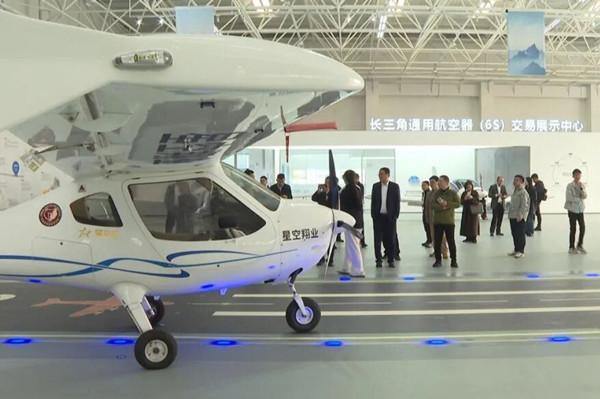
Visitors inspect a low-altitude aircraft. [Photo/Tide News]
By 2027, Huzhou aims to attract over 10 key enterprises in the low-altitude economic chain, initiate more than 100 low-altitude economy industrial projects, each with an investment of over 100 million yuan ($14.62 million), and expand its industry scale to more than 30 billion yuan. The city also plans to establish two key laboratories, execute over 20 tech projects, construct more than 100 landing sites, and develop 50 real-world applications, with annual low-altitude flight hours targeted at more than 150,000.
Deqing county is promoting the integrative development of geographic information and low-altitude economy, leveraging platforms like the Moganshan Geospatial Information Laboratory.
Anji county focuses on integrating low-altitude economy and cultural tourism, having developed multiple helicopter routes for sightseeing tours and hosted national-level paragliding events to boost local tourism.










 浙公网安备33010502011796号