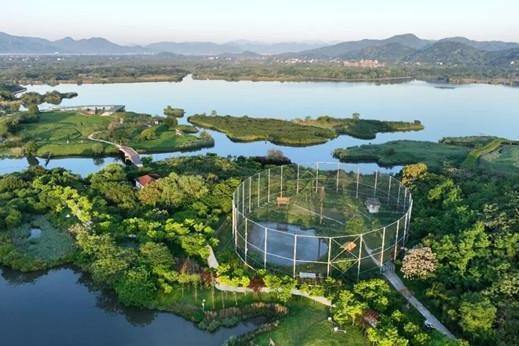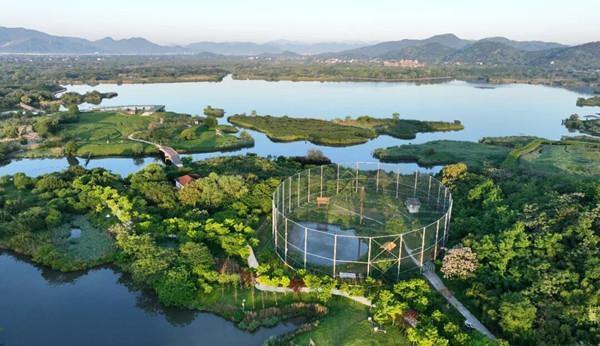
The Xiazhu Lake National Wetland Park. [Photo/WeChat account: huzhoufabu]
A crested ibis chick hatched on May 6 at the Zhejiang Crested Ibis Rescue and Protection Base, located in the Xiazhu Lake National Wetland Park in Deqing county, Huzhou, Zhejiang province, bringing Zhejiang's crested ibis population to 1,000.
Dubbed the "Oriental Gem", the crested ibis is a rare and endangered bird species. In April 2008, Deqing county introduced 10 crested ibises from Zhouzhi, Northwest China's Shaanxi province, establishing the first artificial ex-situ conservation population in southern China.
Over the course of 18 years, the base has expanded from one enclosure to 20, with the fertilization rate of the crested ibis population rising from 26.34 percent to over 87.51 percent and the survival rate of chicks increasing from 33.76 percent to 97 percent.
Currently, the base's population exceeds 1,000, with 531 chicks having hatched in the wild. Continuous efforts to release birds into the wild and reduce human intervention have led to more ibises adapting to natural environments, feeding, nesting, and breeding independently.
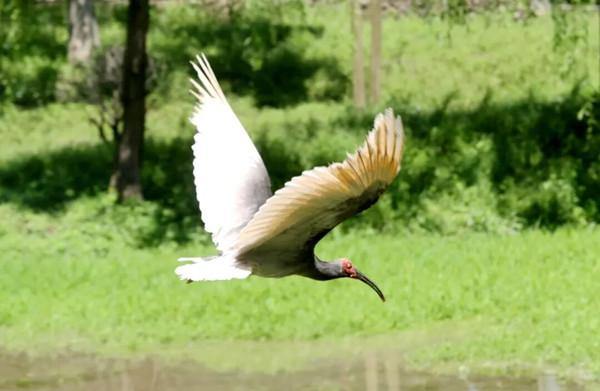
A crested ibis glides over the water. [Photo/WeChat account: huzhoufabu]
"The milestone of surpassing 1,000 crested ibises in Zhejiang is a testament to China's efforts in wildlife conservation," said Fang Shengguo, a professor at Zhejiang University.
In Huzhou, Deqing county has invested a total of 120 million yuan ($17.63 million) in the conservation of the crested ibis population, overcoming technical challenges in breeding, and focusing on wetland restoration and biodiversity conservation. These efforts have laid a solid foundation for the species to thrive.












 浙公网安备33010502011796号