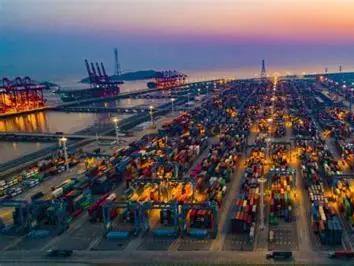
Ningbo has rolled out a new round of measures to deepen cross-border trade facilitation, marking the launch of its version 9.0 reform package. First introduced in 2018, the initiative has continuously evolved, reflecting both national priorities and the city's ambition to strengthen its role as a global trade hub.
The latest plan aligns with China's push for higher-level opening-up during the early years of the 15th Five-Year Plan period (2026-30). Officials say the goal is clear: faster customs clearance, more efficient regulation, smoother logistics and broader connectivity. For Ningbo, optimizing the port business environment is seen as an ongoing process rather than a one-off effort.
This year's reform focuses on implementing key national policies while highlighting local innovation. Measures span AI applications, digitization of logistics documentation, and green marine fuel bunkering. Pilot programs - including multimodal transport single document systems and cross-regional recognition of inspection results - will also be further explored.
Tailored solutions target Ningbo's industrial strengths. New policies support sectors such as new energy, integrated circuits and recycled metals, while logistics upgrades aim to improve shipping efficiency and reduce costs. For businesses, benefits include simplified procedures, whitelist mechanisms for key products, and green channels for sectors like pharmaceuticals.
Digital innovation is another highlight. Initiatives such as paperless bills of lading and AI-assisted inspections are expected to streamline processes and reduce time costs.
With 24 new measures in place, Ningbo aims to deliver tangible gains for companies - lower costs, faster operations and greater flexibility - amid an increasingly complex global trade environment.











 浙公网安备33010502011796号